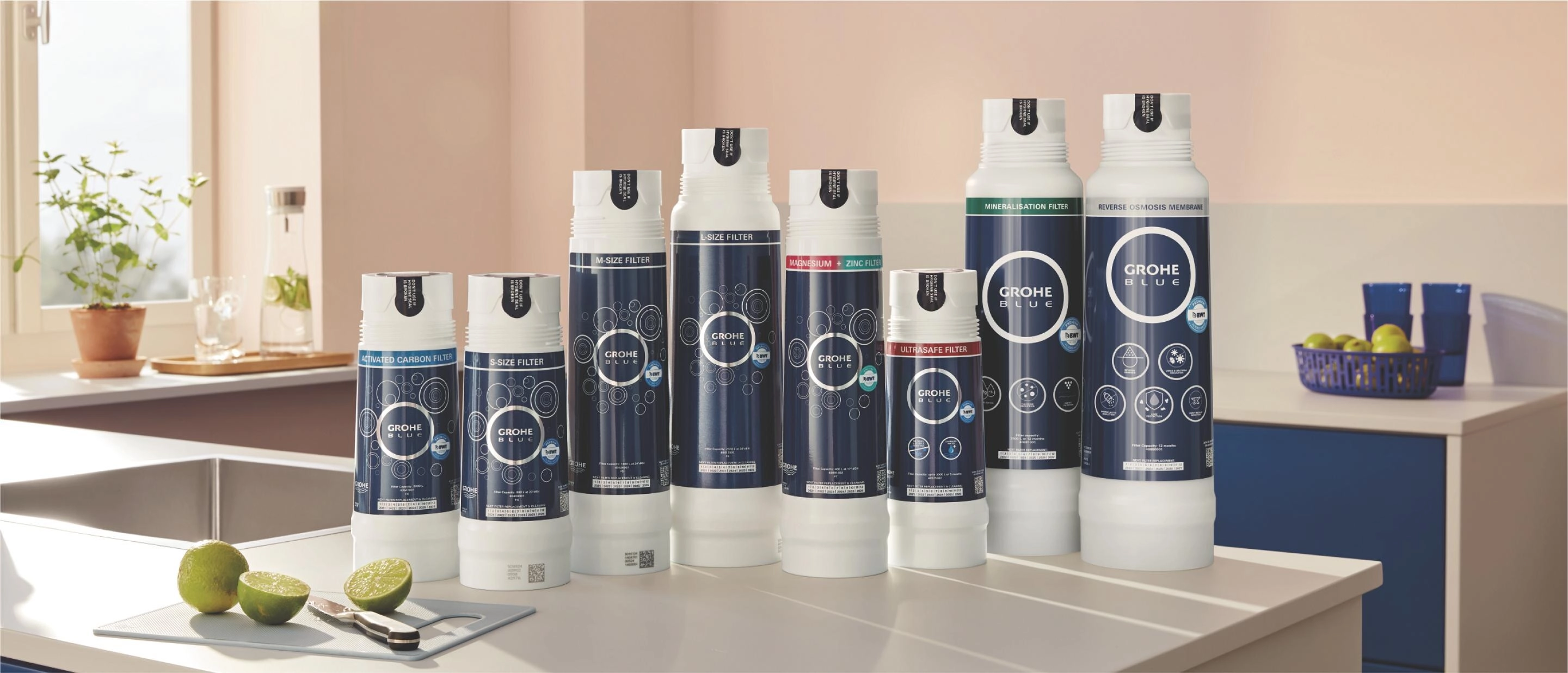
Water quality in the UAE
Safe at the plant. Different by the time it reaches your glass.
UAE tap water is produced to potable standards. What changes taste is everything that happens after the plant — distribution, storage tanks and residual disinfectant. Here is what those stages do, and precisely which of them a GROHE Blue system addresses.
Typical readings
What the numbers usually look like
Indicative ranges for UAE municipal supply. Your building's tank and riser condition matters as much as the network figure.
- Typical TDS
- 100–250 mg/l
- Desalinated supply is naturally low in dissolved solids; blended networks read higher.
- Carbonate hardness
- 2–8 °dH
- Low to moderate, but enough to leave scale marks in kettles and glassware over time.
- Residual chlorine
- 0.2–0.5 mg/l
- Required for safe distribution. It is also the single biggest cause of 'tap taste'.
- Delivered temperature
- 30–45 °C in summer
- Rooftop tanks and hot risers mean cold taps rarely run cold between June and September.
Indicative figures for orientation only. Ask your building management for the latest municipal report and tank cleaning record before you specify a system.
The gap
Potable is a safety standard. It was never a taste standard.
Filtration at the tap works on the last metre — the part no treatment plant can control.
From plant to glass
Four stages, and where taste is lost
01
Desalination and treatment
Seawater is desalinated, disinfected and released into the municipal network to potable standards.
02
Network and building riser
Kilometres of pipework, pressure zones and building risers add particles and metallic notes.
03
Rooftop or basement tank
Stored water warms in ambient heat. Tank hygiene and cleaning cycles vary building to building.
04
Your kitchen tap
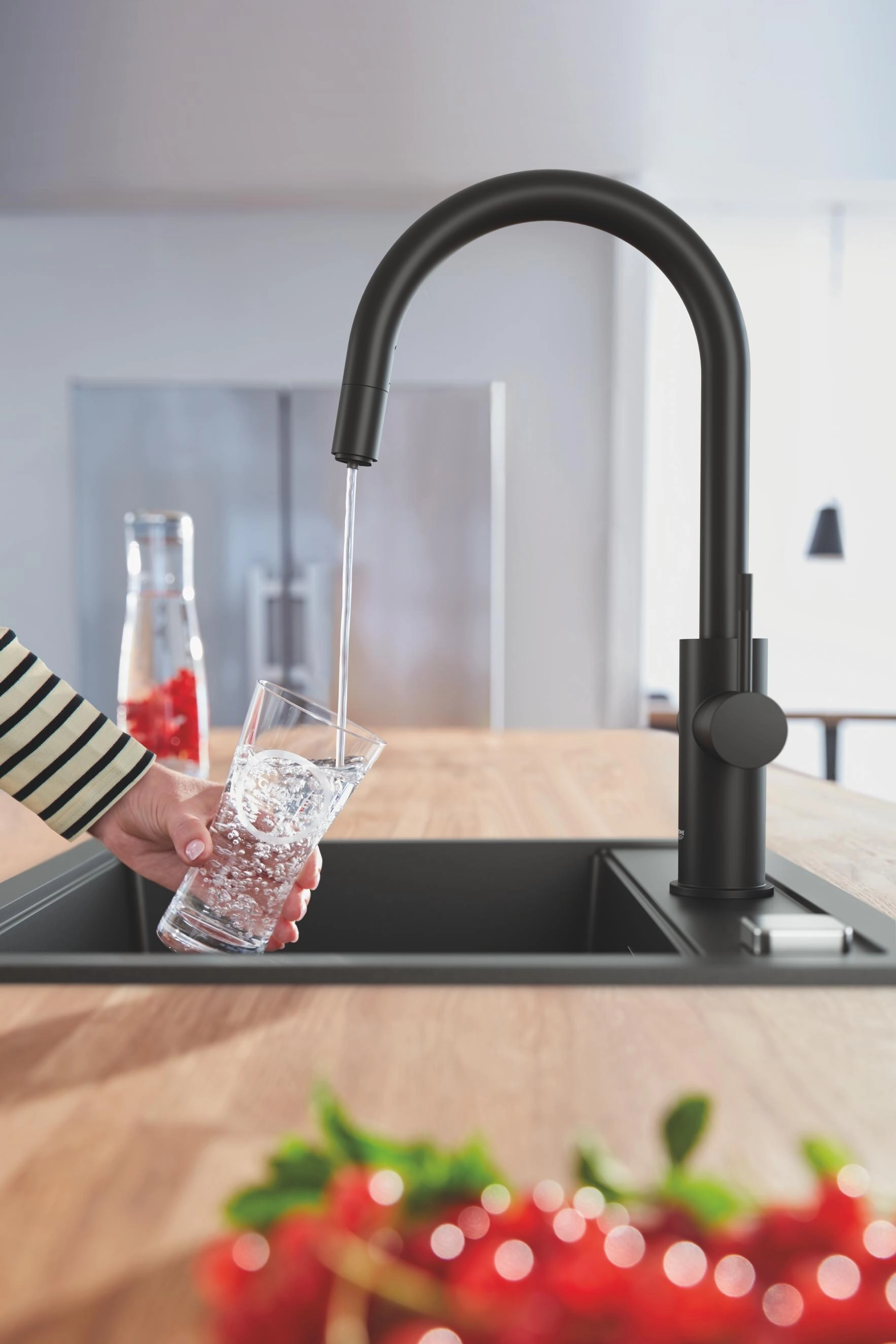
Water arrives safe but warm, chlorinated and flat — the exact three things a GROHE Blue system corrects.
What the filter changes
Honest about what filtration does — and does not do
It improves
- Chlorine taste and odour
- Particles, sediment and metallic notes
- Carbonate hardness on the drinking route
- Consistency — the same glass every time
It does not
- Soften water at showers, machines or bathrooms
- Replace a whole-building tank clean
- Desalinate or remineralise the supply
- Remove the need to change the cartridge on schedule