Sustainability
The most sustainable bottle is the one never produced.
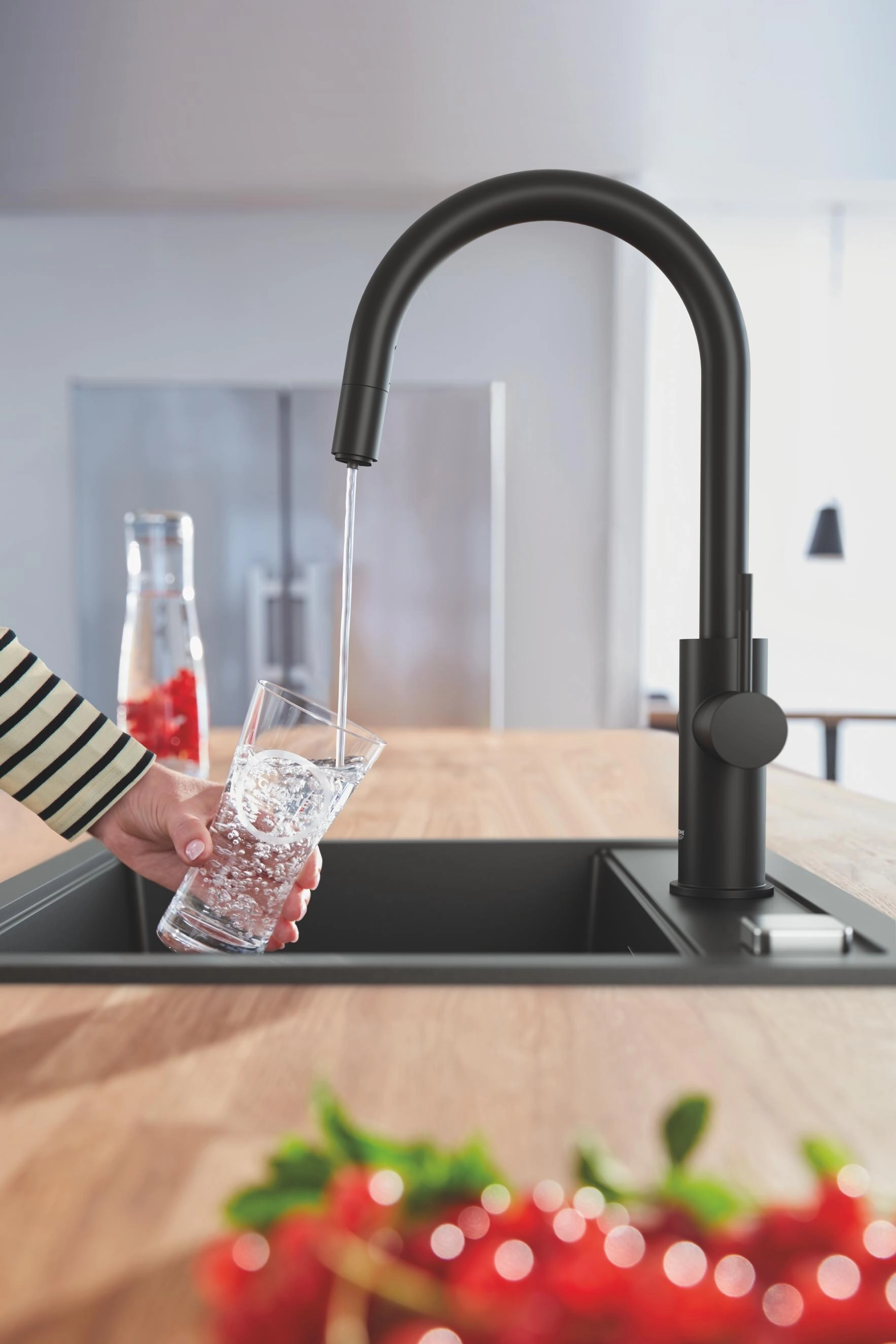
Switching to filtered water at the tap removes plastic, transport and storage from a daily habit. These are the numbers for a typical UAE household — stated plainly, with the assumptions shown.
One household, one year
What the switch actually removes
Based on 3 litres of drinking water a day previously served from 1.5 L retail bottles.
- 730
- Single-use bottles avoided
- A household drinking 3 litres a day, previously served by 1.5 L bottles.
- 21.9 kg
- PET kept out of circulation
- At roughly 30 g per 1.5 L bottle, before caps, labels and shrink wrap.
- ≈ 52
- Delivery trips removed
- A weekly water delivery replaced by a supply that is already in the wall.
- 0
- Bottles stored or carried
- No pallet in the utility room, no crates in the lift, no empties to return.
Compounding
Over ten years, that is more than 7,000 bottles that never existed.
Same household, same three litres a day — just delivered through a tap instead of a supply chain.
Product design
Designed to be serviced, not replaced
Refillable CO₂ cylinders
Cylinders are exchanged and refilled, not discarded. Empties go back with the delivery of the next.
Serviceable, not disposable
Filter heads, brackets and cooler units are individually replaceable, so a single failure never means a new system.
Recyclable cartridges
Spent filter cartridges are collected for recycling through the service network rather than going to landfill.
Built for a long life
GROHE engineering and a supported UAE spare-parts chain keep systems running well beyond the warranty period.
Being straight with you
What we do not claim
Credible sustainability means naming the limits as well as the gains.
- The Professional cooler-carbonator uses electricity continuously — a few dirhams a month, not nothing.
- Manufacturing and shipping a system carries its own footprint, repaid over years of use rather than instantly.
- CO₂ cylinders still require exchange logistics, though far fewer trips than bottled delivery.
- Filter cartridges are consumables; recycling depends on returning them through the service network.